I Built It Completely Wrong. Then I Left It That Way.
Breathtaking Breaks · Episode 01
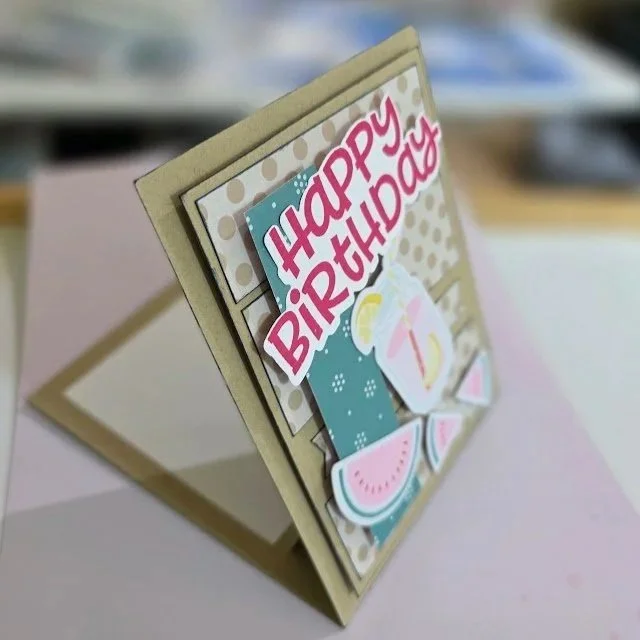
There's a specific feeling you get when you realize something's gone wrong at the craft table.
Not the slow creep of "hmm, this doesn't look quite right." The sharp kind. The stomach-drop kind. The kind where you set it down and just stare at it for a second before your brain catches up to what your eyes are seeing.
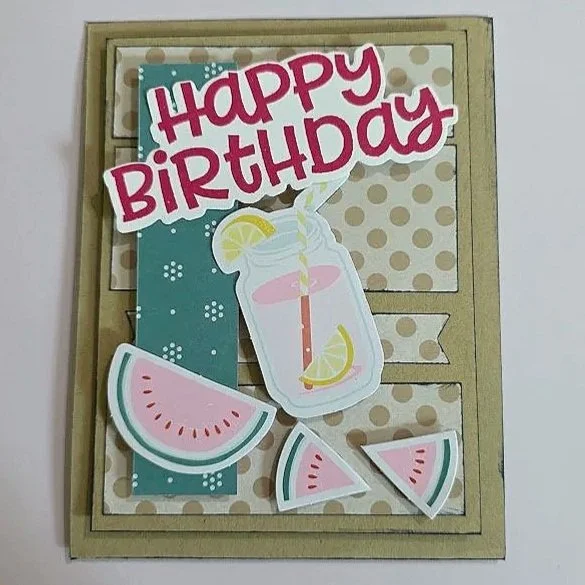
I'd assembled the whole thing — layered the DSP strips, added the embellishments, positioned the die cuts exactly where I wanted them. The birthday card was done. I was pleased with it.
And then I saw it. The opening was at the top. I'd built the entire card upside down.
The Ugh Moment
My first instinct was to take it apart.
That's always the instinct, isn't it? Fix it. Undo it. Get back to where you were supposed to be.
But here's what crafters know that no one talks about: taking it apart has a cost. Paper is thin. Once it's been adhered and pulled, it shows. Wrinkles, bends, the ghost of the adhesive. You can often tell, even after reassembly, that something happened. The card carries the evidence of its mistake even after you've corrected it.
So I paused. I didn't reach for the bone folder or the craft mat. I just looked at it.
The Slow Look
Something about it was more dramatic.
The upside-down orientation created a completely different silhouette. More graphic. More unexpected. The shape had weight at the top and openness at the bottom, which made the Happy Birthday sentiment read as a kind of announcement — bold, declarative, leaning forward.
It wasn't what I planned. But it wasn't wrong either. It was just different.
I left it. I called it a design choice.
What It Actually Became
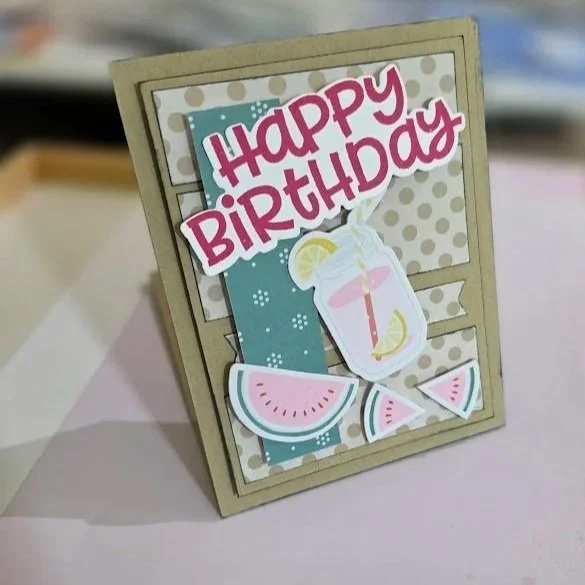
A birthday card assembled upside down doesn't open as expected. But it stands perfectly.
The inverted fold creates a natural easel. Set it on a mantle, a desk, a shelf — it displays the front face-out, like a little standing greeting. The recipient doesn't put it in a drawer. They put it somewhere they can see it.
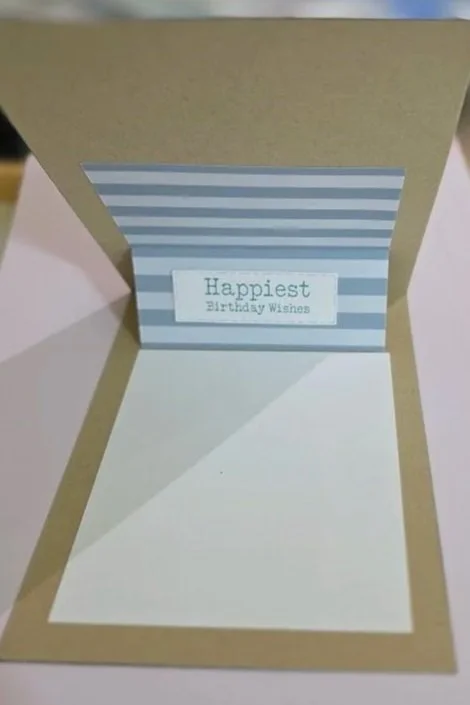
The inside still works. "Happiest Birthday Wishes" on coordinating striped DSP, plenty of room to write. It functions as a card. It just also functions as something you keep out.
The Principle: Before You Fix It, Look at It First
Your first instinct when something goes wrong is to immediately undo it.
Resist for thirty seconds. Set it down. Look at what's actually there.
The wrong version might be telling you something the right version never would.
In this case: assembly order changes everything about how a piece reads. The same card, the same papers, the same die cuts — flipped 180 degrees — became a different object with a different purpose and a longer life in someone's home.
Now I try both orientations on purpose before I commit. What started as a mistake is a technique. It's in my regular rotation.
The Takeaway for Your Craft Table
Next time you make a mistake before you reach for the bone folder to pry it apart:
Set it down. Step back. Give it thirty seconds.
Ask: Is this actually wrong, or is it just different from what I planned?
Sometimes different is better. Sometimes the detour is the design.
This is Episode 01 of Breathtaking Breaks — a series about the mistakes that became something better than the plan. Every episode: one mistake, one pivot, one thing I learned.
